Category: Travel

  • Indonesia – one of the most extraordinary nations on Earth

    Indonesia – one of the most extraordinary nations on Earth

    17,508 Islands – 277M People – 700+Languages – #4Largest Nation

    The World’s Largest Archipelago Nation

    Indonesia, The Emerald Archipelago – where 17,508 islands breathe as one nation. Straddling the equator between the Indian and Pacific Oceans, it is the world’s largest archipelago state, home to the planet’s fourth-largest population, the third-largest democracy, and one of its most staggering reservoirs of cultural and biological diversity. To speak of Indonesia in singular terms is almost a contradiction — it is, at its heart, a universe of thousands of worlds held together by language, ideology, and the quiet miracle of shared identity.

    Its full name, Republik Indonesia, belies a vastness that stretches some 5,100 kilometres from west to east — roughly the distance from London to Tehran — and encompasses more than 17,500 islands, of which around 6,000 are inhabited. Within this immense geography live over 277 million people, making Indonesia the most populous Muslim-majority country in the world and the fourth most populous nation overall, after China, India, and the United States.

    “Indonesia is not just a country. It is an idea — that a people of infinite diversity could choose, against all odds, to be one.”

    It is a land of superlatives and contrasts: ancient Hindu temples standing beside colonial Dutch facades; futuristic Jakarta megacity neighbourhoods neighboured by dense jungle; Sumatran orangutans and Komodo dragons sharing the same geological stage; and over 700 distinct living languages spoken across its islands, representing the world’s second-highest linguistic diversity after Papua New Guinea.

    To truly understand Indonesia is to understand how a nation built on the radical premise of unity in diversity — Bhinneka Tunggal Ika — has spent more than seven decades trying, failing, and succeeding in becoming whole.

    🏛️ Capital

    Nusantara

    New capital (Borneo) — Jakarta was former capital

    📐Total Area

    1,904,569 km²

    3rd largest in Asia

    🗣️ Official Language

    Bahasa Indonesia

    700+ regional languages

    ☪️ Religion

    87% Muslim

    Largest Muslim population on Earth

    💰 GDP (PPP)

    ~$4.3 Trillion

    7th largest economy (PPP)

    🗓️ Independence

    August 17, 1945

    Proclaimed by Sukarno & Hatta

    A World of Islands

    Indonesia’s geography is nothing short of theatrical. It sits upon the Pacific Ring of Fire, one of the most seismically active belts on Earth, giving it over 130 active volcanoes — the highest concentration in any country. This volcanic drama has shaped towering peaks, fertile soils, and landscape of extraordinary beauty across the island chain. The very richness of Indonesian agriculture — rice, coffee, spices, rubber — is in large part the gift of this volcanic earth.

    The archipelago is divided into five major island groups. Each is a world unto itself, with its own ecology, ethnic character, and historical trajectory, yet all are bound under the same red-and-white banner.

    Java

    The Heartland

    Home to more than 151 million people — roughly 56% of Indonesia’s entire population — on an island the size of England. Java contains the capital Jakarta, the ancient city of Yogyakarta, and the iconic Borobudur temple.

    Sumatra

    The Emerald Giant

    A vast tropical landmass draped in equatorial rainforest. Home to the critically endangered Sumatran tiger, orangutan, and rhinoceros, as well as Lake Toba — the world’s largest volcanic lake.

    Borneo (Kalimantan)

    The Ancient Forest

    The world’s third-largest island, shared with Malaysia and Brunei. Its ancient rainforests are among Earth’s oldest, sheltering Borneo orangutans and pygmy elephants. Nusantara, Indonesia’s new capital, is being built here.

    Sulawesi

    The Orchid Island

    An unmistakably shaped island — like a sprawling spider — with dramatic highlands, deeply isolated valleys, and the extraordinary Torajan culture, whose elaborate funeral ceremonies are among the world’s most remarkable.

    Papua

    The Final Frontier

    Indonesia’s eastern half of New Guinea island is perhaps its most remote and biodiverse region. It hosts the Jayawijaya mountain range — capped with glaciers near the equator — and hundreds of indigenous tribes, some with little outside contact.

    Bali

    The Island of Gods

    Though small, Bali holds an outsized place in the world’s imagination. A Hindu-majority island in a Muslim-majority nation, it is famous for its terraced rice paddies, temple-dotted coastlines, and a living artistic tradition of exceptional depth.

    From Ancient Kingdoms to Modern Republic

    Indonesia’s history stretches back tens of thousands of years, through waves of human migration from mainland Southeast Asia, the rise and fall of Hindu-Buddhist empires, the spread of Islam through trade and scholarship, centuries of colonial subjugation, and a 20th-century revolution that gave birth to one of the world’s most improbable states.

    🏺 7th – 14th century

    Hindu-Buddhist Empires

    The maritime empire of Srivijaya dominated trade across the Strait of Malacca, while Majapahit — based in eastern Java — became one of the greatest empires in Southeast Asian history, with cultural and political influence stretching across the region. Borobudur, the world’s largest Buddhist monument, was built during this era.

    ☪️ 13th – 16th century

    The Spread of Islam

    Islam arrived through Arab, Indian, and Chinese Muslim traders, gradually spreading across the archipelago — first in Aceh and the coasts of Sumatra, then across Java, Borneo, and beyond. It largely supplanted Hinduism and Buddhism, though these older traditions left deep cultural imprints that persist today.

    ⚓ 1602 – 1942

    Dutch Colonial Rule

    The Dutch East India Company (VOC) arrived seeking spices and established a colonial stranglehold that would last over three centuries. Under the Dutch East Indies administration, Indonesian resources were systematically extracted. The Cultivation System of the 19th century forced farmers to grow cash crops for export, causing widespread famine. Indonesian nationalist consciousness emerged forcefully in the early 20th century.

    ⚔️ 1942 – 1945

    Japanese Occupation

    The swift Japanese conquest of the Dutch East Indies shattered the myth of European invincibility and, paradoxically, accelerated Indonesian nationalism. Japan promoted Indonesian identity, language, and military organisation — the very tools that nationalists would use to fight for independence.

    🌟 August 17, 1945

    Independence Proclaimed

    Just two days after Japan’s surrender, Sukarno and Mohammad Hatta proclaimed Indonesian independence in a brief but momentous ceremony in Jakarta. The Dutch, unwilling to relinquish their colony, fought a bitter war of reconquest that lasted until 1949, when international pressure finally compelled them to recognise Indonesian sovereignty.

    🏛️ 1998 – Present

    Reformasi & Democracy

    After three decades of authoritarian rule under Suharto’s “New Order,” the Asian financial crisis sparked mass protests that toppled the regime in 1998. The subsequent Reformasi era ushered in democratic elections, regional autonomy, and a free press. Indonesia has since consolidated as one of Asia’s most vibrant democracies, holding direct presidential elections since 2004.

    Bhinneka Tunggal Ika — Unity in Diversity

    Indonesia’s national motto, Bhinneka Tunggal Ika — “Unity in Diversity,” drawn from a 14th-century Javanese poem — is not merely a slogan. It is the operating logic of a civilisation that has chosen to define itself by its multiplicity rather than despite it. No other country on Earth encompasses as many distinct ethnicities, languages, and cultural traditions while maintaining a single constitutional identity.

    Language

    With over 700 distinct languages, Indonesia is the second most linguistically diverse country on Earth. Yet it is united by Bahasa Indonesia — a standardised form of Malay adopted at independence — which serves as the national language of government, education, media, and commerce. Remarkably, Bahasa Indonesia is the mother tongue of only a minority of Indonesians; most grow up speaking a regional language (Javanese, Sundanese, Batak, Balinese, and hundreds more) and learn Bahasa Indonesia as a second language. This multilingual reality has paradoxically created one of the most cohesive national identities in the developing world.

    Religion

    Indonesia is officially neither a secular nor an Islamic state. Its founding ideology, Pancasila, enshrines belief in one God as its first principle — but does not mandate any particular religion. The state officially recognises six religions: Islam, Protestantism, Catholicism, Hinduism, Buddhism, and Confucianism. Around 87% of Indonesians identify as Muslim, making it the world’s largest Muslim-majority country. Yet Indonesian Islam has historically been characterised by a tolerant, syncretic form shaped by pre-Islamic Hindu-Buddhist traditions — though this moderate character has faced internal pressure from more conservative currents in recent decades.

    Arts & Performing Traditions

    Indonesia possesses one of the world’s richest performing traditions. Wayang kulit — shadow puppetry — is recognised by UNESCO as a Masterpiece of Oral and Intangible Heritage of Humanity. These leather shadow puppets, controlled by a master puppeteer (dalang) through all-night performances, dramatise episodes from the Hindu epics Ramayana and Mahabharata, blending ancient myth with Javanese mysticism and social commentary. Gamelan music, the resonant ensemble of bronze percussion instruments, provides its otherworldly soundtrack — an art form that deeply influenced 20th-century Western composers including Debussy and Britten.

    Balinese traditions deserve particular mention: Kecak (the “monkey dance”), Legong, and Barong dances are ritual art forms of extraordinary beauty. Batik — the intricate wax-resist fabric dyeing tradition — is another UNESCO-recognised cultural heritage, central to Javanese identity and national dress.

    Cuisine

    Indonesian cuisine is a symphony of spice, heat, and coconut — one of the world’s most complex and underappreciated food cultures. Rendang (slow-cooked dry beef curry from West Sumatra) has repeatedly topped global rankings of world’s best foods. Nasi goreng (fried rice), satay, gado-gado (peanut sauce salad), and soto (spiced broth) are cornerstones of daily life. Each region maintains its own distinct culinary traditions: the fiery sambals of Padang, the sweet soy flavours of Javanese cooking, the seafood-heavy dishes of the eastern islands.

    “In Indonesia, every island is a different country, and every meal is a different philosophy.”

    Indonesia is Southeast Asia’s largest economy and, by purchasing power parity, among the top ten globally. It is a member of the G20 and has achieved remarkable economic transformation since the 1998 financial crisis, lifting tens of millions out of poverty through sustained growth averaging around 5% annually in the two decades prior to the COVID-19 pandemic.

    Natural Resources

    Indonesia sits atop extraordinary natural wealth. It is the world’s largest producer of palm oil and nickel, a top-five producer of coal, tin, copper, and gold, and a major exporter of natural rubber and tropical timber. Its vast exclusive economic zone makes it one of the world’s most important fishing nations. The country’s nickel reserves have become strategically critical in the global electric vehicle supply chain, giving Indonesia significant geopolitical leverage in the clean energy transition.

    Agriculture & Commodities

    Agriculture employs roughly 30% of the Indonesian workforce. Rice is the foundational staple, but the country also produces significant quantities of coffee (particularly the prized Arabica varieties from Aceh and Toraja), rubber, cocoa, vanilla, and a range of tropical fruits. The Spice Islands — the Maluku archipelago — which once drew European powers across the globe in their quest for cloves and nutmeg, remain producers of these historically precious commodities today.

    Demographics & The Digital Economy

    Indonesia’s young, digitally-connected population — with a median age of around 29 — has made it one of the world’s most exciting digital economies. The country is home to several of Southeast Asia’s largest technology unicorns, including GoTo (formed from the merger of ride-hailing giant Gojek and e-commerce leader Tokopedia) and Bukalapak. Internet penetration has grown rapidly, and Indonesia ranks among the world’s top markets for social media usage, mobile banking, and digital commerce. This demographic dividend, if harnessed effectively through education and infrastructure investment, is widely seen as Indonesia’s most powerful long-term economic asset.

    Nusantara: The New Capital

    In a decision of historic ambition, Indonesia announced it will relocate its capital from the sinking, congested megacity of Jakarta to a brand-new city called Nusantara, being built in the forests of East Kalimantan (Borneo). The project — projected to cost over $30 billion — is intended to relieve Jakarta’s immense environmental pressures, redistribute economic activity beyond Java, and symbolically recentre the nation in the heart of the archipelago. It is one of the largest planned capital relocation projects in modern history.

    One of Earth’s Most Biodiverse Nations

    Indonesia is a megadiverse country — one of just 17 nations that together harbour more than 70% of the world’s biological species. Its rainforests are among the oldest on Earth, surviving the ice ages that stripped much of Europe and North America bare.

    🦧 Sumatran Orangutan🐉 Komodo Dragon🐘 Pygmy Elephant🐯 Sumatran Tiger🦏 Javan Rhinoceros🐦 Bird of Paradise🌿 17,000+ Plant Species🐠 Coral Triangle

    Indonesia lies at the heart of the Coral Triangle — the Amazon of the seas — which contains the highest marine biodiversity on Earth. Its rainforests hold roughly 12% of the world’s mammal species, 17% of all bird species, and 10% of all plant species. Yet this natural inheritance is under severe pressure from deforestation, driven largely by palm oil and pulpwood plantations, representing one of the world’s most urgent conservation challenges.

    The World’s Third-Largest Democracy

    Indonesia is a unitary presidential republic governed under a constitution originally enacted in 1945 and significantly amended during the Reformasi era. The President serves as both head of state and head of government, elected by popular vote for a maximum of two five-year terms. The People’s Consultative Assembly (MPR) consists of two chambers: the House of Representatives (DPR) and the Regional Representative Council (DPD).

    The country’s democratic transition after 1998 is widely regarded as one of the most successful in the developing world. Free elections, a vibrant free press, an independent judiciary, and robust civil society have all taken root. Indonesia has navigated the peaceful transfer of power across multiple administrations — from the tumultuous reformist governments of the late 1990s and early 2000s, through the developmental presidency of Susilo Bambang Yudhoyono (2004–2014), to the populist, infrastructure-focused tenure of Joko Widodo (“Jokowi,” 2014–2024), and most recently the election of former military general and defence minister Prabowo Subianto in 2024.

    Indonesia’s democratic health is nonetheless contested. Concerns persist about the influence of oligarchic business networks, the political role of the military, restrictions on civil liberties in Papua, and the rising tide of religious conservatism. But the overall trajectory — 25 years after the fall of Suharto — remains a remarkable democratic success story by regional and global standards.

    Foreign Policy

    Indonesia’s foreign policy is anchored in the principle of “bebas dan aktif” — “free and active” — meaning independent non-alignment combined with engaged multilateral diplomacy. Indonesia was a founding member of ASEAN and has been a consistent champion of regional autonomy from great-power pressure. It chairs or plays key roles in international forums including the G20 (which it hosted in Bali in 2022) and the East Asia Summit. In an era of intensifying US-China rivalry, Indonesia has carefully maintained strategic ambiguity, seeking economic ties with China while preserving security partnerships with the United States.

    The Archipelago That Chose to Be One

    Indonesia defies easy summary. It is too large, too varied, too complex, and too alive to be reduced to a single story. It is a nation that should, by the logic of geography, language, and history, be many nations — and yet it is one.

    Its contradictions are its character: a Muslim majority nation with Hindu temples and Christian highlands; an equatorial country with glaciers; an ancient civilisation in the midst of a digital revolution; a democracy with deep authoritarian residue; a country of extraordinary beauty and acute environmental crisis.

    What Indonesia represents, ultimately, is an experiment — the audacious, ongoing, improbable experiment in whether humanity’s most diverse archipelago can become, generation by generation, more united than divided. Seven decades in, the answer is: not yet complete, but still trying. And that, perhaps, is the most human thing about it.

    Bhinneka Tunggal Ika — Unity in Diversity
  • India: The Eternal Tapestry of a Billion Dreams

    India: The Eternal Tapestry of a Billion Dreams

    India is not merely a country; it is a civilization, an idea, and a breathtaking paradox all at once. Officially the Republic of India (Bhārat Gaṇarājya), it is the world’s most populous nation (over 1.4 billion people), its largest democracy, and the seventh-largest country by land area. To speak of India is to speak of extremes: the snow-capped Himalayas and steamy tropical backwaters; ancient Sanskrit chants and cutting-edge space technology; profound, soul-searching spirituality and frenetic, world-beating capitalism. It is a land where every mile changes the language, every temple tells a story, and every festival is a riot of color. India does not simply exist; it overwhelms, enchants, and endures.

    Geography and Climate: A Subcontinent of Spectacular Diversity

    India occupies the Indian subcontinent in South Asia, a vast landmass bounded by the towering Himalayas to the north, the Arabian Sea to the west, the Bay of Bengal to the east, and the Indian Ocean to the south. Its geography is a study in extremes, divided into several distinct physiographic regions.

    • The Himalayan Range: The world’s youngest and highest mountain range forms India’s northern border. It is the source of India’s major, sacred river systems—the Ganges (Ganga), Indus, and Brahmaputra—and acts as a climatic barrier, trapping monsoon rains.
    • The Indo-Gangetic Plain: A vast, fertile alluvial plain stretching from the Indus to the Ganges-Brahmaputra delta. This is India’s “breadbasket,” one of the most intensively farmed and densely populated regions on Earth, home to the capital, New Delhi.
    • The Thar Desert: Located in the northwestern state of Rajasthan, this arid, sandy desert supports a unique ecosystem and a resilient culture of fortresses and camel caravans.
    • The Peninsular Plateau (Deccan): A ancient, rugged plateau bounded by the Western Ghats (a UNESCO World Heritage site and a global biodiversity hotspot) and the Eastern Ghats. This region is rich in minerals and black cotton soil.
    • The Coastal Plains: Narrow strips of land between the ghats and the sea, home to India’s major port cities like Mumbai, Chennai, and Kochi, as well as the famous backwaters of Kerala.

    Climate: India has a tropical monsoon climate, but it varies dramatically from region to region.

    • The Seasons: Winter (January-February), Summer (March-May), Monsoon (June-September), and Post-Monsoon (October-December).
    • The Monsoon: The lifeblood of the nation, the southwest monsoon delivers 70-80% of India’s annual rainfall. Its arrival is celebrated; its failure spells drought and famine. The northeast monsoon brings rain to the southeastern coast.
    • Regional Variation: The Thar Desert sees less than 150mm of rain annually, while Mawsynram in Meghalaya (northeast India) holds the world record for average annual rainfall (over 11,000mm). Temperatures range from sub-zero in the Himalayas to over 50°C (122°F) in the Thar.

    History: The Cradle of Civilizations and the March to Modernity

    India’s history is a 5,000-year epic of empires, ideas, invasions, and an extraordinary struggle for freedom.

    Ancient India (c. 3300 BCE – 550 CE): The Indus Valley Civilization (Harappa and Mohenjo-Daro) was one of the world’s three earliest urban civilizations, with advanced city planning, plumbing, and trade networks. Its decline ushered in the Vedic Period, which composed the Vedas (the oldest scriptures of Hinduism) and established the foundations of the caste system, Sanskrit literature, and early Hindu philosophy. This era produced the great epics—the Mahabharata (the world’s longest poem) and the Ramayana. The Mauryan Empire (322-185 BCE) under Ashoka united most of the subcontinent and spread Buddhism across Asia. The Gupta Empire (c. 320-550 CE) is remembered as India’s “Golden Age,” a time of astronomical, mathematical (inventing the concept of zero), and literary brilliance.

    Medieval India (c. 550 CE – 1526 CE): The collapse of the Gupta Empire led to regional kingdoms. The south saw the powerful Chola, Chera, and Pandya dynasties, who built magnificent temples and extended Indian trade influence to Southeast Asia. The north saw repeated invasions from Central Asia. The Delhi Sultanate (1206-1526) established Islamic rule for the first time, leaving a lasting impact on architecture and culture.

    The Mughal Empire (1526-1857): One of the world’s great gunpowder empires, the Mughals unified most of India under a single, opulent rule. Emperor Akbar is famed for his policy of religious tolerance and administrative genius. Shah Jahan built the Taj Mahal—a mausoleum of white marble that is the undisputed jewel of Islamic art in India. The last great Mughal, Aurangzeb, expanded the empire but his religious intolerance sowed seeds of conflict.

    The British Raj (1858-1947): The British East India Company gained control after the Battle of Plassey (1757). The brutal Indian Rebellion of 1857 (called the Sepoy Mutiny by the British) led to the dissolution of the company and direct rule by the British Crown—the Raj. This period was marked by massive economic exploitation, the destruction of local industries, devastating famines, and the institutionalization of racial hierarchies. It also saw the birth of the Indian National Congress (1885) and the rise of the independence movement, led by figures like Mahatma Gandhi, whose philosophy of non-violent civil disobedience (Satyagraha) inspired the world.

    Independence and Partition (1947): India finally gained independence on August 15, 1947. Tragically, it was accompanied by the bloody Partition of the subcontinent into two nations: Hindu-majority India and Muslim-majority Pakistan. Up to 15 million people were displaced, and over a million died in communal violence. The trauma of Partition remains a defining scar on the national psyche.

    Politics and Government: The World’s Largest Democracy

    India is a sovereign, socialist, secular, democratic republic with a parliamentary system of government. Its constitution, adopted in 1950, is the world’s longest written constitution.

    • The President: The head of state, elected by an electoral college for a five-year term. The role is largely ceremonial.
    • The Prime Minister: The head of government, who holds the real executive power. The Prime Minister is typically the leader of the majority party or coalition in the lower house of Parliament. As of 2026, the political landscape continues to evolve, but the office remains the most powerful in the nation.
    • Parliament: Bicameral, consisting of the Lok Sabha (House of the People, directly elected) and the Rajya Sabha (Council of States, elected by state legislatures).
    • States and Union Territories: India is a federal union of 28 states and 8 union territories, each with its own elected government (except union territories, which are administered by the central government).

    Indian democracy is famously robust and chaotic, with over 2,500 political parties and the world’s largest election exercise (nearly 1 billion eligible voters). It faces persistent challenges: political corruption, dynastic politics, religious polarization, and the influence of money and caste in elections.

    Culture: Unity in Infinity

    India’s culture is not a single stream but a confluence of thousands of tributaries. The phrase “Unity in Diversity” is not a slogan but a survival mechanism.

    Religion: India is the birthplace of four world religions—Hinduism (79.8% of the population), Buddhism, Jainism, and Sikhism. It is also the world’s third-largest Muslim population (14.2%) and has significant Christian, Zoroastrian (Parsi), and Jewish communities. Religion permeates daily life, from the morning prayers to the thousands of festivals.

    Festivals (The “Festival of the Year”): The calendar is a relentless celebration. Diwali (the festival of lights) is the Hindu New Year, celebrating the victory of light over darkness. Holi (the festival of colors) marks spring with a joyful, messy abandon. Eid-ul-Fitr, Christmas, Gurpurab (Sikh), Pongal, and Navaratri are national events.

    Languages: The Constitution recognizes 22 official languages, but there are over 120 major languages and 1,600 dialects. Hindi is the most widely spoken, but English is the associate official language and the language of business, higher education, and the judiciary. A typical educated Indian is at least bilingual, often trilingual.

    Performing and Visual Arts:

    • Dance: Classical forms (Bharatanatyam, Kathak, Odissi, Kuchipudi, Manipuri, Mohiniyattam, Kathakali) are highly stylized, spiritual storytelling. Folk dances (Bhangra, Garba) are exuberant and regional.
    • Music: The two classical traditions are Hindustani (North Indian) and Carnatic (South Indian). Both are based on raga (melodic framework) and tala (rhythmic cycle). Bollywood film music (playback singing) is the most popular genre.
    • Film (Bollywood and Beyond): India produces more films annually than any other country. “Bollywood” (Hindi-language cinema, based in Mumbai) is the most famous, known for its three-hour musical melodramas. However, regional cinemas—Tamil (Kollywood), Telugu (Tollywood), Malayalam, Kannada, Bengali—are equally vibrant and prolific.

    Economy: The Emerging Tiger

    India has the world’s fifth-largest economy by nominal GDP and the third-largest by purchasing power parity (PPP). It is the fastest-growing major economy in the world.

    • Key Sectors:
      • Services: The engine of modern India. IT and business process outsourcing (BPO) are global leaders, with giants like TCS, Infosys, and Wipro. The startup ecosystem is booming (the “Unicorn” capital of Asia). Financial services, telecommunications, and healthcare are also major drivers.
      • Agriculture: Still employs over 40% of the workforce, though its share of GDP is declining (around 15-20%). India is the world’s largest producer of milk, pulses, and spices; the second-largest of rice, wheat, and sugar; and a top producer of fruits and vegetables.
      • Manufacturing: The government’s “Make in India” initiative aims to boost this sector. India is a major manufacturer of pharmaceuticals (the “pharmacy of the world”), automobiles, textiles, chemicals, and steel.
    • Infrastructure Revolution: Massive investments in roads (the Golden Quadrilateral highway network), railways (including high-speed rail projects), airports, and digital infrastructure (India has the world’s cheapest mobile data) are transforming the country.
    • Space and Technology: The Indian Space Research Organisation (ISRO) is a world leader in cost-effective space exploration, having successfully orbited Mars (Mangalyaan) and landed near the lunar south pole (Chandrayaan-3) on a shoestring budget.

    Modern Society and Daily Life

    Modern India is a society in overdrive, navigating the tension between ancient hierarchies and modern aspirations.

    The Urban-Rural Divide: Over 65% of Indians still live in villages. Urban India (Mumbai, Delhi, Bangalore, Hyderabad, Chennai, Kolkata) is hyper-globalized, with gleaming malls, tech parks, and a consumer culture. Rural India, while electrified and connected by mobile phones, still grapples with poverty, lack of sanitation, and dependence on the monsoon.

    Social Challenges:

    • The Caste System: Though constitutionally outlawed and urbanizing, caste remains a powerful social reality, especially in villages and marriage arrangements. Discrimination against “Scheduled Castes” (Dalits, formerly “untouchables”) and “Scheduled Tribes” (Adivasis) persists.
    • Gender Inequality: While women are CEOs and fighter pilots, the country struggles with female infanticide, child marriage (declining but present), dowry-related violence, and pervasive workplace harassment.
    • Poverty and Inequality: India has lifted hundreds of millions out of extreme poverty in the last two decades. However, inequality is stark and growing. The gap between the rich and the poor is one of the world’s widest.

    Education and Healthcare:

    • Education: The Right to Education Act (2009) guarantees free and compulsory education for children aged 6-14. The IITs (Indian Institutes of Technology) and IIMs (Indian Institutes of Management) are world-class, but the public school system suffers from poor infrastructure and teacher shortages.
    • Healthcare: A mix of public and private. India is a world leader in medical tourism (affordable, high-quality surgeries). However, public healthcare spending is low, and out-of-pocket expenses for the poor remain a leading cause of poverty.

    Cuisine: The Spice of Life: Indian food is a symphony of flavor, dominated by the nuanced use of spices (not just “heat”). There is no single “Indian cuisine,” but rather 30+ distinct regional cuisines:

    • North Indian: Rich, creamy gravies (butter chicken, dal makhani), tandoori breads (naan), and biryani.
    • South Indian: Rice-based, fermented (dosa, idli, vada), and flavored with curry leaves, mustard seeds, and coconut.
    • East Indian: Sweeter, with mustard oil and panch phoron (five-spice blend); famous for fish curries and sweets like rasgulla.
    • West Indian: Diverse; fiery Goan vindaloo (Portuguese-influenced), vegetarian Gujarati thali, and spicy Mumbai street food (vada pav, pav bhaji).

    Environment and Challenges

    India faces an acute environmental crisis. It is home to 14 of the world’s 20 most polluted cities. Air pollution causes over a million premature deaths annually. Groundwater depletion threatens agriculture. Rapid deforestation collides with the need to protect iconic wildlife—the Bengal tiger (India is home to 70% of the world’s tigers), the Asiatic lion (only in Gir Forest), and the Indian elephant. Climate change is an existential threat, with rising sea levels threatening coastal cities like Mumbai and Kolkata, and erratic monsoons disrupting farming.

    Conclusion: The Idea of India

    India is not for the faint of heart. It is loud, crowded, chaotic, and often frustrating. But it is also breathtakingly beautiful, endlessly inventive, and possessed of an unshakeable spiritual core. The “Idea of India”—that a billion people of every faith, language, and ethnicity can live together under a single, secular, democratic roof—is an audacious experiment. It is an experiment that has outlasted every prediction of its failure. To know India is to understand that its contradictions are not weaknesses but the very source of its enduring, vibrant, and extraordinary life. As a Sanskrit proverb says, “Vasudhaiva Kutumbakam” —”The world is one family.” In India, that family is always having a celebration, a debate, and a feast.

  • China, Five Thousand Years of Civilization

    China, Five Thousand Years of Civilization

    For decades, the standard image of a Chinese vacation was rigid: climb the Great Wall, gaze at the Terracotta Warriors, and take a blurry photo from the Bund in Shanghai. While those icons remain majestic, a quiet—or rather, explosive—revolution is underway.

    In 2026, China is no longer just a destination to be seen; it is a reality to be experienced. From riding the world’s longest high-speed rail network to dining in a quarry-floor hotel and paying for it all with a wave of your phone, the Middle Kingdom has transformed into the world’s most dynamic travel playground. With visa policies liberalized and a record 1.63 billion domestic trips projected for 2026 , here is how to navigate the new China.

    1. The Great Unlocking: Visas and Digital Integration

    The first major hurdle for international travelers has effectively vanished. Following the confirmation of a 30-day visa-free policy for UK passport holders and expanded 144-hour transit rules for many Western nations, entry has never been easier .

    However, the real game-changer is the “Digital Silk Road.” The days of fumbling for cash are over. Alipay and WeChat now accept international credit cards, allowing tourists to seamlessly pay for street skewers in Chengdu or luxury goods in Shanghai .

    Pro Tip: Download and verify your passport on these apps before you leave home. For navigation, while Google Maps is blocked, Apple Maps works flawlessly for public transit, and Amap (Gaode) is the local gold standard for taxi-hailing .

    2. The Connector: High-Speed Rail

    Forget internal flights with their long security lines and delays. The story of modern Chinese travel is written on its rails. With the network surpassing 50,000 kilometers (roughly 70% of the global total), China’s high-speed rail (HSR) has compressed the nation .

    • The Speed: Trains routinely hit 350 km/h. The trip from Beijing to Shanghai, once a 10-hour slog, is now a comfortable 4.5-hour ride.
    • The Reach: Remote regions like Ningxia and Guizhou are now accessible as weekend getaways from major hubs .
    • The Experience: Unlike air travel, HSR stations are often located closer to city centers. You can now leave Shanghai in the morning, have lunch in Xi’an, and be hiking in Sichuan by dinner.

    3. The “Innovation Tourism” Boom

    A new breed of traveler is coming to China not just for history, but for the future. Dubbed “Innovation Tourism” by industry analysts, this trend sees tourists visiting tech hubs the way they once visited temples .

    Specialized itineraries now offer behind-the-scenes access to giants like Baidu, DJI, and Alibaba. Tourists can:

    • Witness autonomous vehicle demonstrations at Baidu’s Apollo Park in Beijing.
    • Fly drones at the DJI headquarters in Shenzhen.
    • Explore the massive data centers in Guiyang, which has rebranded itself as “China’s Big Data Valley” .

    In 2026, understanding where the future is built is just as compelling as understanding the past.

    4. The Rise of the Second Cities (The “Hidden Gems”)

    While pollution and crowds have sometimes marred the reputation of the mega-cities, China’s second and third-tier cities are offering a polished, high-tech, yet deeply cultural alternative.

    Guiyang (Guizhou Province): Once a sleepy industrial hub, Guiyang is now a model of “Smart Tourism.” Using AI-enabled platforms, tourists can check real-time crowd density at the Huangguoshu Waterfall or use facial recognition to enter scenic spots. It is the perfect blend of Miao minority culture, spicy sour fish soup, and 5G connectivity .

    Chongqing: This municipality has become an Instagram sensation for its futuristic architecture. Visitors flock to the Raffles City skybridge (300 meters long, suspended 250 meters in the air) and the “Magic BRT” building where a bus passes through a residential tower block .

    5. Engineering Marvels & Vertical Adventures

    China is redefining “sightseeing” by turning its massive infrastructure projects into tourist attractions.

    • The FAST Telescope (Guizhou): The world’s largest radio telescope (500 meters in diameter) is now open to tourists, offering “scientific tourism” retreats where you can unplug from the digital world and listen to the stars .
    • The Huajiang Grand Canyon Bridge: Standing at a dizzying 625 meters, this is the tallest bridge in the world. For adrenaline junkies, it offers a bungee jumping platform that is not for the faint of heart .
    • Shimao Wonderland Intercontinental (Shanghai): An 18-story luxury hotel built into the rock face of a water-filled quarry. Guests can abseil down the exterior or look out from underwater rooms .

    6. The “Experience China” Shift

    The old model was “Look China” (sightseeing). The 2026 model is “Experience China” .
    Travelers are eschewing bus tours for immersion. In Lijiang and Suzhou, tourists are renting traditional Hanfu (historical clothing) to wander ancient gardens. In Shanghai, the trend is not just the Bund, but finding a hole-in-the-wall Manner Coffee on the North Bund to sip a latte while watching the Oriental Pearl Tower pierce the sunset .

    Food is also leading the charge. Street food tours in Chengdu (spicy Sichuan peppercorns) and breakfast markets in Wuhan (hot dry noodles) are becoming the primary motivators for trips.

    7. The Ultimate Shopping Hub: Hainan

    For those who mix leisure with luxury, Hainan Island is solidifying its status as the “Hawaii of the East.” Following the launch of island-wide special customs operations, the duty-free allowances are the most generous on earth.

    The recent China International Consumer Products Expo (CICPE) in Haikou showcased how the island is blending high-end retail with beach resorts. With 59 countries eligible for visa-free entry, Hainan is a seamless blend of sun, sand, and shopping .

    Practical Planning: The 2026 Checklist

    • Timing is Everything: Avoid the first two weeks of February (Lunar New Year/Spring Festival) and the first week of October (National Day Golden Week). During these times, train tickets sell out instantly, and sites like the Forbidden City are shoulder-to-shoulder .
    • Connectivity: E-Sims are available, but for a true local experience (renting bikes, using local food delivery), a physical Chinese SIM card (China Telecom/Unicom) is better .
    • Budget: China offers high-value travel. A solid 4-star hotel averages $60-$120 USD per night. A meal at a fantastic local restaurant might cost $10-$15 USD per person .

    The Verdict

    China in 2026 is a study in beautiful contrasts. It is a land of 2,000-year-old temples and self-driving taxis. It is a place where you can meditate in a misty mountain monastery in the morning and ride a maglev train at 430 km/h in the afternoon.

    The “China Shock” of the past has been replaced by “China Innovation.” For the modern traveler seeking a destination that challenges, surprises, and operates at light speed, there is nowhere else on earth quite like it.

  • Asia means exploring a rich tapestry of histories, peoples, and landscapes

    Asia means exploring a rich tapestry of histories, peoples, and landscapes

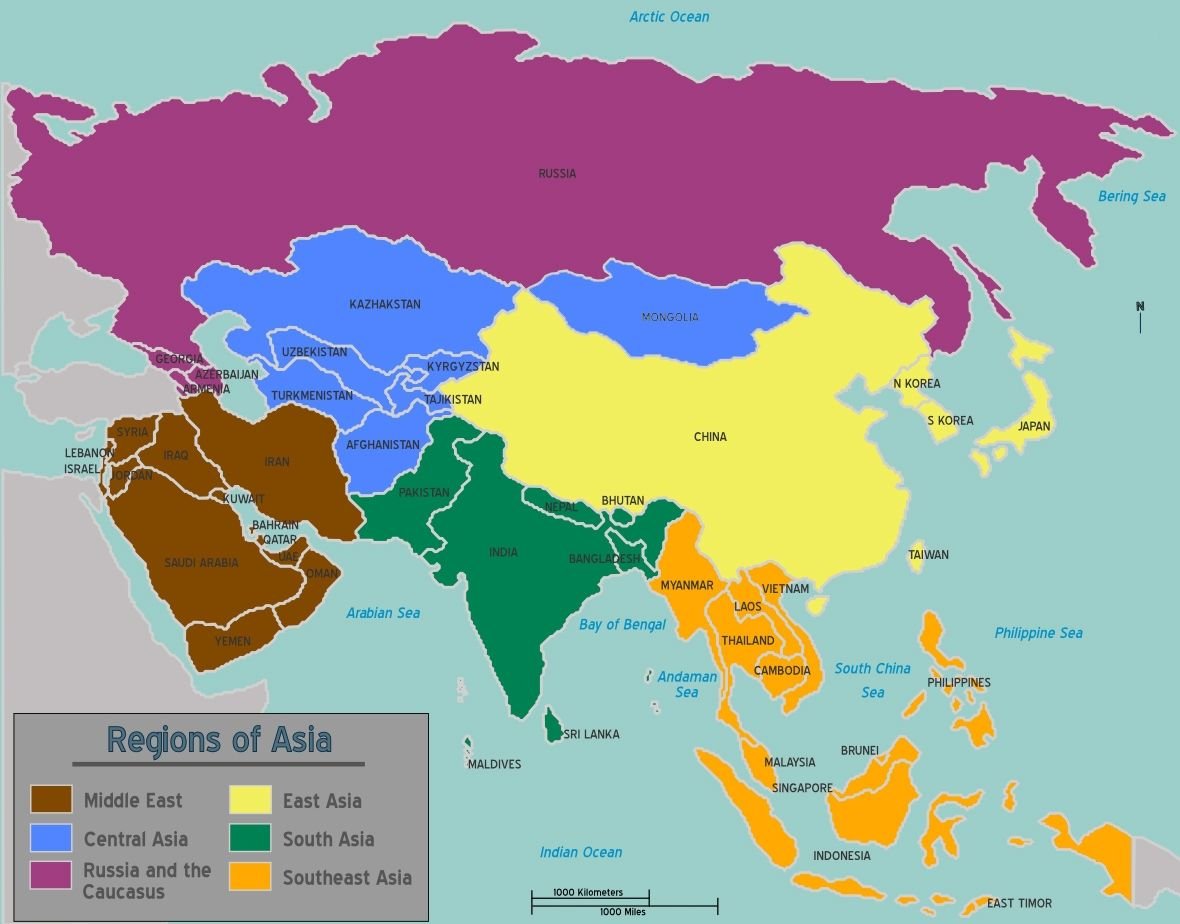
    Of all the continents on Earth, Asia is the largest, the most populous, and arguably the most diverse. For a traveler, it is not so much a single destination as a universe of distinct regions, each with its own history, faiths, flavors, and rhythms. From the modern megalopolises of East Asia to the spice-scented jungles of Southeast Asia, the vast steppes of Central Asia, the holy rivers of South Asia, and the oil-rich deserts of Western Asia, a journey across this continent is a journey through time itself.

    This article divides Asia into five major travel regions: East Asia, Southeast Asia, South Asia, Central Asia, and Western Asia (often called the Middle East). For each, we will explore the must-see countries, iconic experiences, culinary highlights, cultural etiquettes, and practical travel tips.


    East Asia: Where Ancient Tradition Meets Futuristic Speed

    East Asia is a land of striking contrasts. Here, neon-lit skylines tower over thousand-year-old temples, and bullet trains zoom past rice paddies. The dominant travel destinations are Japan, South Korea, China, Taiwan, and Mongolia.

    Japan is the epitome of organized beauty. In spring, hanami (cherry blossom viewing) sweeps from Kyoto’s serene Philosopher’s Path to Tokyo’s bustling Ueno Park. In winter, Hokkaido’s powder snow attracts skiers, while autumn paints Nikko’s Toshogu Shrine in fiery reds and golds. Don’t miss a stay in a traditional ryokan (inn) with an onsen (hot spring) and a kaiseki multi-course dinner.

    South Korea offers a vibrant blend of K-pop energy and Buddhist calm. Seoul’s Gyeongbokgung Palace is a regal step into the Joseon dynasty, while the colorful houses of Busan’s Gamcheon Culture Village offer modern art. For nature, hike the volcanic crater of Jeju Island’s Hallasan or visit the historic village of Andong Hahoe.

    China is so vast that it alone contains multiple regions. The Great Wall at Mutianyu, the Forbidden City in Beijing, and the Terracotta Army in Xi’an are unmissable history lessons. Meanwhile, Zhangjiajie’s pillar-like mountains inspired the floating Hallelujah Mountains in Avatar. Shanghai’s Bund showcases colonial-era architecture alongside the futuristic Pudong skyline.

    Taiwan is a culinary and natural gem. Taipei’s night markets (like Shilin) serve up stinky tofu and bubble tea. The east coast’s Taroko Gorge offers marble-walled canyons and hiking trails. Soak in the hot springs of Beitou or cycle around Sun Moon Lake.

    Mongolia is for the adventurous. The Gobi Desert’s flaming cliffs hide dinosaur fossils, while the Khövsgöl Nuur lake is pristine blue. Stay in a traditional ger (yurt) with a nomadic family, ride a Mongolian horse, and experience the Naadam Festival of wrestling, archery, and horse racing.

    Food to try: Sushi and ramen in Japan; Korean BBQ and kimchi; Peking duck and dim sum in China; beef noodle soup in Taiwan; fermented mare’s milk (airag) in Mongolia.

    Etiquette: Bow in Japan and Korea. Remove shoes before entering homes. In China, avoid sticking chopsticks upright in rice (it resembles funeral incense). In Mongolia, always accept a cup of milk tea with your right hand.

    Best time to visit: Spring (March-May) and autumn (Sept-Nov) for most of the region. Mongolia is best in summer (June-Aug).


    Southeast Asia: The Backpacker’s Paradise of Beaches and Temples

    Southeast Asia is hot, humid, and hedonistic in the best sense. It is affordable, easy to navigate, and packed with wonders. Key countries: Thailand, Vietnam, Indonesia, Philippines, Malaysia, Cambodia, Laos, Myanmar, Singapore, and Brunei.

    Thailand is the most visited. Bangkok’s Grand Palace and Wat Arun dazzle, while Chiang Mai offers dozens of ancient temples (wats) and cooking classes. The south has the beaches: Phuket, Krabi, Koh Samui, and the Full Moon Party on Koh Phangan. For a quieter paradise, try Koh Lipe or the Similan Islands for diving.

    Vietnam stretches its S-shape from Hanoi in the north to Ho Chi Minh City in the south. Halong Bay’s limestone karsts are surreal, and the ancient town of Hoi An is lantern-lit and bicycle-friendly. The Hai Van Pass is a legendary motorbike drive, and the Mekong Delta is a labyrinth of floating markets.

    Indonesia is an archipelago of over 17,000 islands. Bali is the crown jewel for yoga, surfing in Uluwatu, and rice terraces in Ubud. But go further: Lombok’s Mount Rinjani trek, Komodo Island’s dragons, and Java’s Borobudur – the world’s largest Buddhist temple.

    Philippines has some of the world’s best island-hopping. Palawan’s Puerto Princesa Underground River and El Nido’s lagoons are breathtaking. Siargao is the surfing capital, while Cebu offers whale shark watching (done ethically in Oslob, though debates continue).

    Malaysia is two worlds: the Malay Peninsula and Borneo. Kuala Lumpur’s Petronas Towers, Penang’s George Town street food and murals, and the tea plantations of Cameron Highlands. In Borneo, see orangutans in Sepilok and climb Mount Kinabalu.

    Cambodia houses Angkor Wat, the largest religious monument on earth. Sunrise over Angkor is a life-changing sight. Beyond temples, Phnom Penh’s Tuol Sleng Genocide Museum is a somber but essential history lesson.

    Laos is landlocked and laid-back. Luang Prabang’s alms-giving ceremony to saffron-robed monks at dawn is unforgettable. Vang Vieng’s limestone mountains are for kayaking and caving; the Plain of Jars remains mysterious.

    Myanmar (still recovering from political turmoil, check current safety) offers Bagan’s plains of thousands of ancient pagodas and Inle Lake’s leg-rowing fishermen.

    Singapore is ultra-modern, clean, and green. Gardens by the Bay, Marina Bay Sands, and hawker centers (try chicken rice and chili crab). It’s a quick stop but a luxurious one.

    Brunei is tiny and rich from oil. The water village of Kampong Ayer and the opulent Jame’ Asr Hassanil Bolkiah Mosque are highlights.

    Travel tips: Use Grab (ride-hailing) instead of local taxis. Drink bottled water. Learn basic phrases like “thank you” (terima kasih in Malay/Indonesian, khob khun in Thai). Dress modestly at temples – cover shoulders and knees.

    Best time: Dry season varies. Generally, November to February is cooler. For western Indonesia and Malaysia, May to September is best.


    South Asia: Spiritual Depths and Himalayan Heights

    South Asia is the land of the Taj Mahal, Everest, and the Ganges. It is intense, chaotic, and profoundly moving. Key countries: India, Nepal, Sri Lanka, Bhutan, Bangladesh, Pakistan, and the Maldives.

    India is a continent in one country. The Golden Triangle (Delhi, Agra’s Taj Mahal, Jaipur’s Pink City) is the classic intro. Varanasi on the Ganges is Hinduism’s holiest city – witness the Ganga Aarti ceremony at dusk. Goa has beaches and Portuguese-era churches. Kerala’s backwaters are serene on a houseboat. For mountains, head to Ladakh or Himachal Pradesh (Manali, Dharamshala). Don’t miss Rajasthan’s desert forts (Jaisalmer) or Mumbai’s bustling street life.

    Nepal is for trekkers. The Everest Base Camp trek and the Annapurna Circuit are world-famous. But even without hiking, Kathmandu’s Durbar Square and Swayambhunath (Monkey Temple) are rich in Newari art. Pokhara, by Phewa Lake, offers paragliding with mountain views.

    Sri Lanka is “India Lite” – easier to travel but no less beautiful. Sigiriya’s Lion Rock fortress, the Temple of the Tooth in Kandy, and the tea country around Ella. Take the blue train from Kandy to Ella through misty plantations. Safari in Yala National Park for leopards and elephants.

    Bhutan measures its success by Gross National Happiness. It is expensive (daily sustainable development fee), but the reward is pristine Himalayan culture. Paro Taktsang (Tiger’s Nest Monastery) clings to a cliff face. Punakha Dzong is a fortress of beauty.

    Maldives is the ultimate luxury beach destination. Overwater bungalows, turquoise atolls, and world-class snorkeling and diving. Also available on a budget by staying on local islands (e.g., Maafushi).

    Pakistan is emerging for adventure tourism. Hunza Valley’s apricot blossoms and Rakaposhi mountain views, the fairy-tale landscapes of Swat, and the Karakoram Highway.

    Bangladesh – less touristy but the Sundarbans mangrove forest (home to Bengal tigers) and the world’s longest natural sea beach at Cox’s Bazar are unique.

    Food: India’s curries, dosas, and biryani; Nepal’s momos (dumplings); Sri Lanka’s hoppers and kottu roti; Bhutan’s spicy ema datshi (chilies and cheese).

    Etiquette: Use your right hand for eating and giving money. Remove shoes before temples. In India and Nepal, head wobble means “yes” or “I understand.” Dress conservatively, especially for women.

    Best time: October to March is ideal (dry and cool). Summer (April-June) is very hot; monsoons (July-September) bring heavy rains.


    Central Asia: The Silk Road’s Forgotten Frontier

    Central Asia is remote, wild, and steeped in the lore of caravans and conquerors like Genghis Khan and Tamerlane. Countries: Kazakhstan, Kyrgyzstan, Uzbekistan, Turkmenistan, and Tajikistan.

    Uzbekistan is the heart of the Silk Road. Samarkand’s Registan Square, with its turquoise tilework, is stunning. Bukhara’s old town is a living museum of madrasas and caravanserais. Khiva’s walled inner city, Itchan Kala, feels like an open-air film set.

    Kyrgyzstan is for nature lovers. The alpine lakes of Issyk-Kul (the second-largest high-altitude lake in the world) and Song-Kul (where nomadic herders live in yurts). Trekking in the Tian Shan mountains, especially around Karakol and Ala-Archa Gorge, is extraordinary.

    Kazakhstan is vast and modernizing. Almaty is a green, tree-lined city with a Soviet history. The Charyn Canyon is like a mini Grand Canyon. Nur-Sultan (Astana) has futuristic architecture. Also, the Caspian Sea coast and the Baikonur Cosmodrome (spaceport) can be visited with special permits.

    Tajikistan is dominated by the Pamir Mountains, known as the “Roof of the World.” The Pamir Highway (M41) is one of the world’s most epic road trips. Dushanbe, the capital, has a pleasant, laid-back atmosphere.

    Turkmenistan – the North Korea of Central Asia – is challenging but surreal. Ashgabat is a city of white marble palaces and golden statues. The Darvaza Gas Crater (“Door to Hell”) burns day and night. Tours are required, and permits are expensive.

    Food: Plov (rice pilaf with meat and carrots) is the regional dish; samsas (stuffed pastries); laghman (noodle soup); and kumis (fermented mare’s milk).

    Etiquette: Tea is sacred – never refuse. Always give small gifts to your host if staying in a home. Dress modestly, especially in rural areas and mosques.

    Best time: Spring (April-May) and autumn (September-October) for mild weather. Summer is hot, winter is brutally cold.


    Western Asia (Middle East): Crossroads of Civilizations

    Western Asia is where three continents meet. It is ancient, controversial, and deeply hospitable. Key travel destinations: Turkey, United Arab Emirates, Jordan, Israel, Iran, Oman, Lebanon, Saudi Arabia (now opening to tourism), and Qatar.

    Turkey (Turkiye) straddles Europe and Asia. Istanbul’s Hagia Sophia, Blue Mosque, and Grand Bazaar are legendary. Cappadocia’s fairy chimneys and hot air balloons at sunrise are magical. Ephesus is a stunning Greco-Roman ruin. Pamukkale’s white travertine terraces are surreal. The Mediterranean coast (Antalya, Bodrum, Fethiye) offers blue cruises.

    United Arab Emirates – Dubai and Abu Dhabi are about luxury and record-breaking: Burj Khalifa (tallest building), Palm Jumeirah, Ferrari World, and the Louvre Abu Dhabi. Sharjah is the cultural capital. Emirati culture is best experienced at a desert camp or in heritage villages.

    Jordan is safe and rewarding. Petra, the rose-red city carved into cliffs, is a wonder of the world. Wadi Rum’s desert valleys are Martian in appearance – sleep under stars in a Bedouin camp. Float in the Dead Sea, the lowest point on Earth.

    Israel (and Palestinian Territories) is holy to Jews, Christians, and Muslims. Jerusalem’s Old City holds the Western Wall, Church of the Holy Sepulchre, and Dome of the Rock. Tel Aviv is modern and beachy. The Dead Sea is shared with Jordan. Bethlehem (West Bank) and Masada’s fortress are also key.

    Iran – Persepolis’s ancient ruins, Isfahan’s Naqsh-e Jahan Square (a UNESCO site), and Shiraz’s gardens and poetry. Iranian hospitality is legendary. Note visa rules for US/UK/Canadian citizens; use a guide if needed.

    Oman is underrated but stunning. Muscat’s Grand Mosque and Muttrah Souk, the dramatic canyons of Jebel Akhdar (Green Mountain), and the empty quarter desert (Rub’ al Khali). Also, turtle watching at Ras al Jinz.

    Lebanon offers Beirut’s nightlife, Roman ruins at Baalbek, and the Jeita Grotto. Despite political instability, its beauty and food (tabbouleh, kebbeh, hummus) draw resilient travelers.

    Saudi Arabia has opened tourist visas since 2019. Al-Ula’s Madain Saleh (similar to Petra), Riyadh’s Kingdom Centre, and the Red Sea coast’s diving around Yanbu. Dress codes are very strict.

    Qatar – Doha’s Museum of Islamic Art, Souq Waqif, and the futuristic Pearl-Qatar. It’s a hub for connecting flights; a 2-3 day stopover is plenty.

    Food: Kebabs, meze (hummus, baba ghanoush, falafel), baklava, Turkish delight, shawarma, and Persian saffron rice.

    Etiquette: Dress very modestly – women should cover shoulders, knees, and often hair in Iran and Saudi Arabia. In mosques, remove shoes. During Ramadan, don’t eat, drink, or smoke in public from dawn to dusk. Never use your left hand for eating or giving.

    Best time: Spring (March-May) and autumn (September-November). Summer is extremely hot (over 40°C / 104°F) except in the mountains.


    Practical Final Tips for Traveling Across Asia

    1. Visas: Always check ahead. Many Southeast Asian countries offer visa-free or visa-on-arrival. China, India, Iran, and Central Asian countries generally require advance visas.
    2. Health: Vaccinations for hepatitis A, typhoid, and Japanese encephalitis are recommended. Malaria risks exist in rural Southeast Asia and South Asia. Bring mosquito repellent.
    3. Money: Cash is still king in much of Asia, especially for markets and small shops. Japan, South Korea, and big cities in China/India accept cards widely. Download the Grab or Gojek app for cashless rides.
    4. Connectivity: Buy a local SIM at the airport. eSIMs (like Airalo) work well in most countries.
    5. Power: Plugs vary. Universal adapter is a must. Voltage: 220-240V in most (except Japan, Taiwan 100V).
    6. Safety: Most of Asia is safe for travelers. Use common sense: avoid political protests, watch for scams (especially around tourist sites in India, Vietnam, Morocco), and keep valuables secure.
    7. Respect: Learn local greetings and hand gestures. Don’t touch people’s heads (sacred in Buddhist cultures). Pointing with your feet is rude. In temples, never point your feet toward a Buddha statue.

    Asia rewards the patient traveler and dazzles the curious one. Whether you’re sipping tea in a Tokyo skyscraper, bargaining for spices in a Marrakech souk (in Africa, but similar vibe), or sleeping in a ger under the Mongolian stars, each region offers not just sights, but stories. Pack light, keep an open mind, and let the oldest continent on Earth teach you something new.